.svg?w=300&h=85)
How to Wash a Silk Pillowcase: Hand Wash vs. Machine Wash Guide | TOWNSSILK
A silk pillowcase looks effortless on the bed, but its care is more precise than cotton or microfiber. Because silk is a protein fiber, the wrong water temperature, detergent, or wash cycle can dull its sheen, weaken the fabric, and shorten its lifespan. This guide from TOWNSSILK walks readers through a practical silk pillowcase washing guide, comparing hand washing and machine washing so they can choose the safest method for their fabric type. You will learn how to prepare, wash, dry, and maintain a silk pillowcase with steps that are simple, careful, and suitable for everyday home care.
Why Silk Needs a Different Wash Routine
Silk pillowcase care starts with understanding what makes the fabric unique. Unlike cotton or synthetic bedding, silk is a protein fiber made from natural filaments. That structure gives a silk pillowcase its smooth feel and subtle sheen, but it also makes the fabric more vulnerable to heat, harsh detergents, and abrasion. Those factors matter when you are comparing a silk pillowcase hand wash approach with a machine wash silk pillowcase routine, because the wrong conditions can shorten the life of the fabric over time.
Why silk fibers are sensitive
Silk fibers are fine, smooth, and naturally lustrous, which is why a silk pillowcase feels soft against the skin and hair. But that same delicacy means the fabric responds differently to washing than sturdier textiles. Excess heat can stress the fiber structure, while strong cleaning agents can strip away the natural smoothness that gives silk its signature finish.
This is especially important for premium bedding, including a 22mm silk pillowcase, where the density of the fabric supports a fuller hand and better durability, but still requires careful handling. A silk pillowcase washing guide is not just about keeping it clean; it is about preserving the fiber’s appearance and feel over repeated use. Even routine laundering can gradually affect sheen if the wash environment is too aggressive.
What poor washing can damage
Poor washing practices usually show up slowly. One of the first signs is loss of shine. When silk is exposed to harsh detergent or repeated friction, the surface can become dull rather than smooth. The fabric may also lose softness, making it feel less comfortable against the skin.
Over time, aggressive washing can weaken the fiber itself. Frequent rubbing, twisting, or strong mechanical action may stress the weave and lead to pilling, snags, or thinning in high-contact areas. Heat can also contribute to shrinkage or distortion, which may change the fit and drape of the pillowcase. For printed or dyed silk, improper washing can affect color consistency as well, making the surface look uneven.
This is why how to wash silk pillowcase matters so much in everyday care. The goal is not just cleanliness; it is maintaining the look, texture, and strength of the fabric. When washing is too rough, the pillowcase may still be usable, but it will not keep the same refined finish for as long.
Takeaway: silk needs gentler care because heat, harsh detergents, and friction can slowly reduce its shine, softness, and strength.
Prepare Before You Wash
Before you decide how to wash silk pillowcase fabric, take a few minutes to set up properly. A careful start protects the finish, helps prevent stress on the fibers, and makes silk pillowcase care more consistent over time.
Check the care label first
The care label is the first place to look in any silk pillowcase washing guide. It tells you whether the fabric is meant for hand washing, whether machine washing is allowed, and whether the item needs extra limits such as cool water only or no bleach.
If you are caring for a 22mm silk pillowcase, the label matters even more because higher-weight silk can still need gentle handling. Do not assume all silk pillowcases share the same instructions. Some finishes, dyes, or trim details may require a more specific approach than the fabric alone suggests.
If the label says hand wash only, plan for a silk pillowcase hand wash and avoid preparing a machine cycle. If machine washing is allowed, the label should still guide you on water temperature and detergent type. This quick check removes guesswork before any water is added.
Gather gentle wash essentials
Once the label is clear, collect only the basics you need for silk pillowcase care. Use cool water, not hot water, because cooler temperatures are safer for silk and help reduce stress on the fibers.
Choose a mild detergent made for delicate fabrics or silk. Strong detergents can be too aggressive for a silk pillowcase, especially if used regularly. Measure carefully; more detergent is not better when washing delicate fabric.
A clean basin is the best setup for a hand wash. It should be free of leftover soap, stain remover, or bleach residue, since these can affect the fabric’s surface. If the label allows machine washing, place the pillowcase in a mesh laundry bag before it goes into the washer. The bag helps reduce rubbing against the drum and other items in the load.
Keep the rest of your setup simple. You do not need extra cleaners, fabric softener, or hot water. For most silk pillowcase care routines, the goal is controlled, gentle handling from the very beginning.
Takeaway: check the care label, then prepare cool water, mild detergent, a clean basin, and a mesh laundry bag before washing.
Hand Wash a Silk Pillowcase
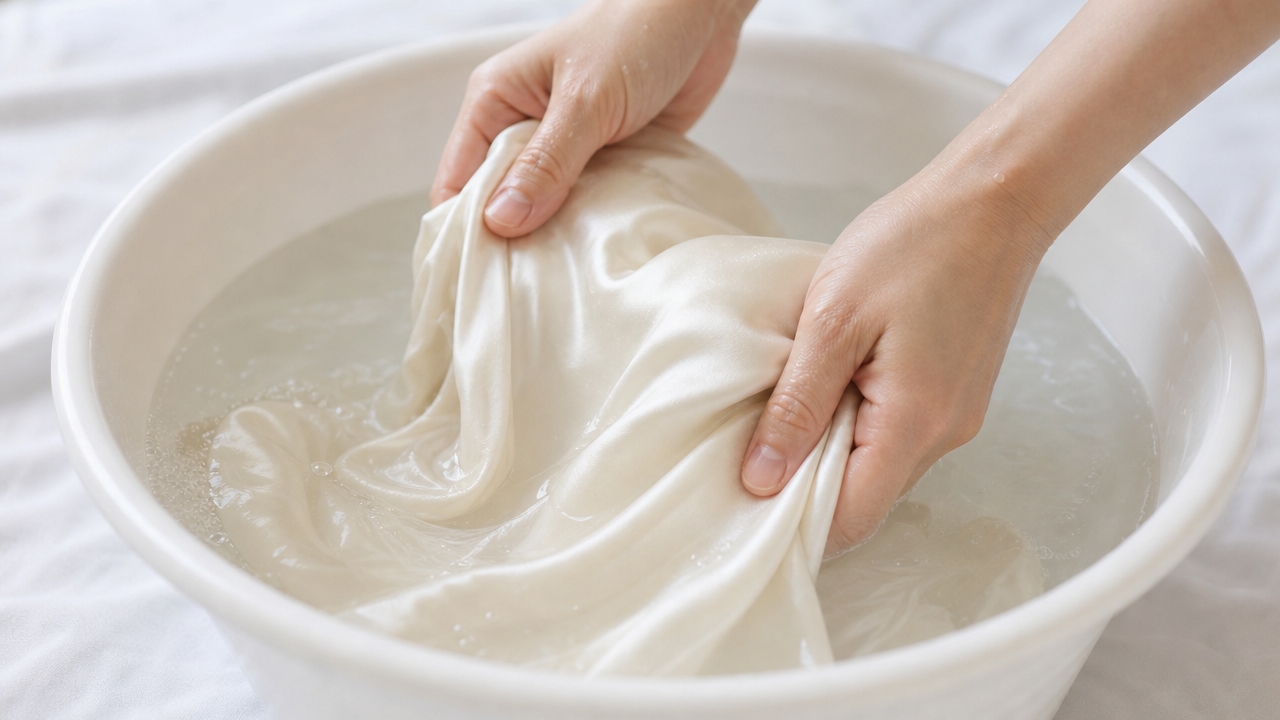
A careful hand wash is the most controlled way to clean a silk pillowcase. The goal is to remove residue without stressing the fibers, so keep the motion soft, the soak brief, and the handling minimal.
Soak and gently agitate
Place the silk pillowcase in the prepared wash bath and let it rest for a short soak. A few minutes is usually enough to loosen body oils and light buildup without overhandling the fabric. If needed, move the pillowcase through the water with slow, gentle swishes.
Keep the movement light and flat. Do not scrub spots with your fingers, rub the fabric against itself, or knead it the way you would thicker textiles. Those actions can disturb the weave and dull the surface of a silk pillowcase over time.
If there is a visibly soiled area, focus on soft pressing rather than friction. Press the fabric between your hands or against the water in the basin, then let it relax again. For most silk pillowcase care routines, the less force you use, the better the result.
Rinse without twisting
Once the water looks dirty or the pillowcase has finished soaking, drain the basin and rinse with clean water. Move the fabric through the rinse water gently so any remaining detergent lifts away. Repeat with fresh water until no slippery residue or suds remain.
Handle the pillowcase carefully while it is wet, since silk is more vulnerable when saturated. To remove excess water, press it lightly between your hands or against the side of the basin. You can also lay it flat on a clean towel and press from the top to absorb moisture.
Do not wring, twist, or stretch the fabric. Those motions can distort the shape and put stress on the seams. Keep the pillowcase supported as you lift it, especially along the edges and corners.
A proper silk pillowcase hand wash should leave the fabric clean, smooth, and intact, with no harsh manipulation at any stage.
Takeaway: For hand washing a silk pillowcase, use brief soaking, very gentle movement, thorough rinsing, and no twisting or scrubbing.
Machine Wash a Silk Pillowcase
Machine washing can work for a silk pillowcase only when the label allows it and the fabric is sturdy enough for a very gentle cycle. The goal is to reduce friction, keep the load light, and avoid anything that can stress the weave.
Use a Mesh Bag, Cold Water, and a Delicate Cycle
Put the pillowcase inside out and close the zipper to avoid scratching during wash. Then place it in a fine mesh laundry bag before washing. The bag helps protect the fabric from rubbing against the drum, zippers, and other textiles. Use cold water and a delicate or silk cycle, then add only a mild detergent made for fine fabrics.
Keep the load small so the pillowcase can move freely. Avoid bleach, fabric softener, and any setting that uses strong agitation. For most silk pillowcase care routines, cooler water and the gentlest cycle are the safest machine wash choices.
Keep Spin Speed Low and Skip Heavy Loads
Set the spin speed to the lowest option available, or use the shortest gentle spin your machine offers. High-speed spinning can crease the fabric and put stress on the seams. Do not wash silk with towels, denim, or other heavy items that can increase friction.
A 22mm silk pillowcase can usually tolerate more than very light silk, but it still needs careful handling. If the pillowcase has embroidery, piping, or a very refined finish, hand washing is still the safer route.
How to Tell the Difference Between Safe Convenience and Unnecessary Risk
Machine washing is a convenience, not the default. Choose it only when the care label clearly allows it and the fabric is designed for that level of handling. If the pillowcase feels thin, delicate, or uncertain in construction, the lower-risk option is still hand washing.
Takeaway: machine washing can work for a silk pillowcase, but only on a cold, gentle cycle with a mesh bag, low spin, and no heavy load.
Hand Wash vs. Machine Wash
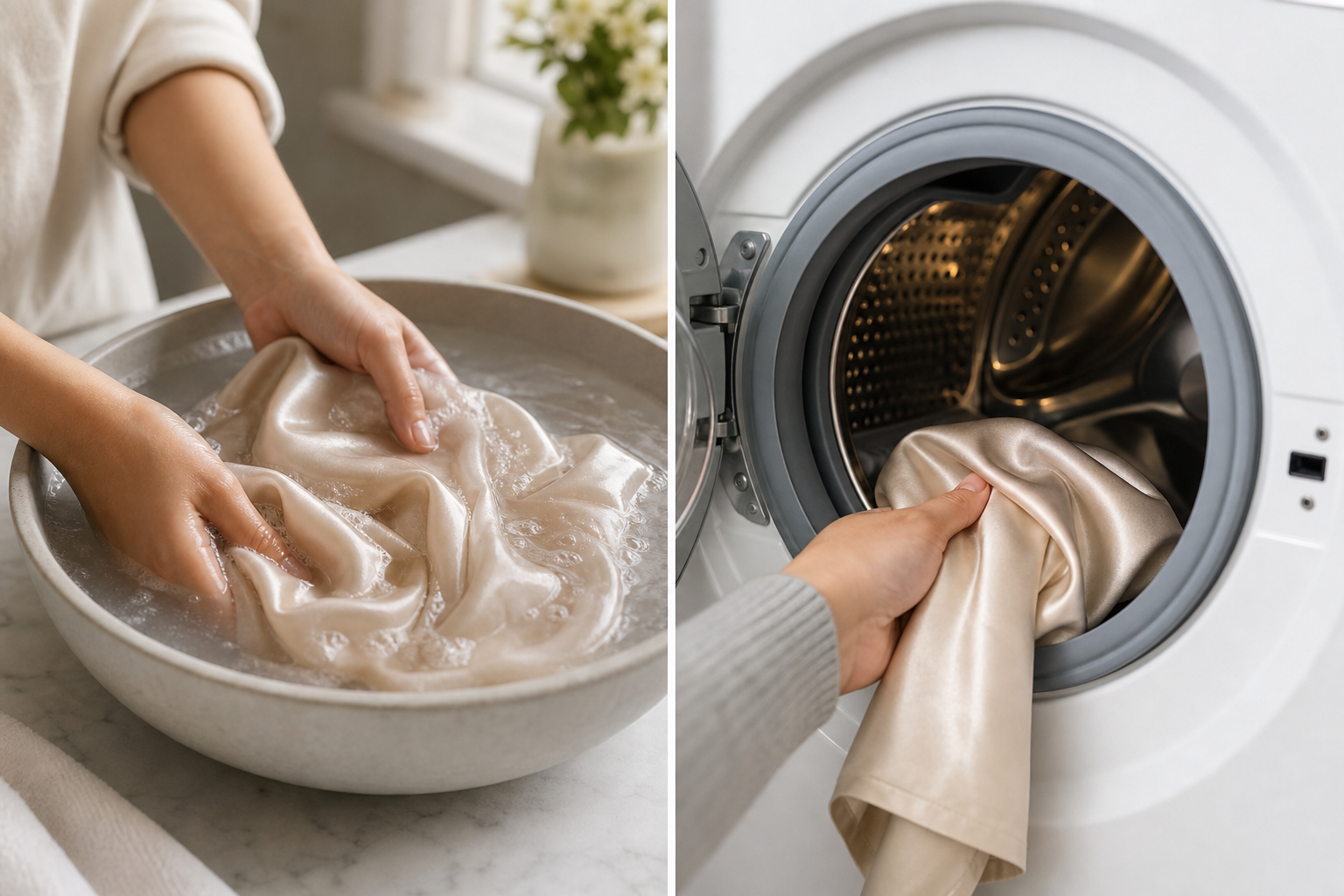
Both methods can work for a silk pillowcase, but they do not offer the same level of control. The right choice depends on the silk weight, construction, and how much risk you are willing to take with friction and agitation. For most silk pillowcase care routines, hand washing is the safer default. Machine wash silk pillowcase care can be acceptable only when the fabric is sturdy enough and the wash cycle is extremely gentle.
When hand washing is the safer choice
Hand washing is usually the better option for delicate silk, lighter-weight weaves, trims, or pillowcases with embroidery, piping, or decorative seams. It gives you more control over water movement and reduces rubbing against the fabric itself and other laundry items.
It is also the safer route when:
- the care label is cautious or unclear
- the pillowcase is new and you want to protect the finish
- the fabric feels especially smooth, thin, or delicate
- you are washing a pure silk item without reinforcement
For anyone learning how to wash silk pillowcase fabric for the first time, hand washing is the most forgiving method. It lowers the chance of creasing, snagging, and uneven wear.
When machine washing can work
Machine washing can work for some silk pillowcases when the label allows it and the fabric is substantial enough to handle gentle care.
A 22mm silk pillowcase is often the better candidate in this group because the heavier momme weight gives it more body than lighter silk. If the pillowcase has visible embellishment or a very fine finish, hand washing is still the safer call.
| Method | Best for | Main advantage | Main risk |
|---|---|---|---|
| Hand wash | Delicate silk, decorated pillowcases, first-time silk pillowcase care | Maximum control and lowest friction | More time and handling |
| Machine wash | Select durable silk, including some 22mm silk pillowcase styles | Faster and more convenient | Agitation, snagging, and fabric stress |
Choosing the lower-risk option for your fabric
If you are deciding between convenience and preservation, choose the method that puts less stress on the silk. That usually means hand washing for everyday silk pillowcase washing guide advice, and machine washing only when the fabric is strong enough and the cycle is truly gentle. If you are unsure, treat the pillowcase as delicate and keep it out of the machine.
Takeaway: Hand washing is the safest default, while machine wash silk pillowcase care should be reserved for sturdy silk like some 22mm pillowcase styles and only on the gentlest cycle.
Dry and Press Silk Safely
After washing, the way you dry a silk pillowcase matters just as much as the wash itself. Silk is delicate when wet, so the goal is to remove moisture without stressing the fibers, then finish only if the fabric truly needs it.
Remove water gently
Never wring, twist, or squeeze a silk pillowcase hard. When silk is saturated, the fibers are easier to distort, and aggressive handling can weaken the weave, leave creases, or affect the smooth finish. Instead, support the fabric evenly and press out excess water with a clean towel.
Lay the pillowcase flat on a dry towel, roll the towel up with the silk inside, and press lightly along the roll. This helps absorb moisture without pulling the fabric out of shape. If the silk still feels very damp, repeat with a second dry towel rather than applying force. The pillowcase should be moved carefully at this stage, not tugged by corners or seams.
Keep drying away from direct sunlight. Strong sun can fade color and may make silk feel harsher over time. A shaded, well-ventilated indoor area is the safest choice for silk pillowcase care. Hang it or lay it flat only where air can circulate freely, and avoid placing it near heaters, radiators, or other direct heat sources.
Air dry and press on low
Air drying is the preferred finish for most silk pillowcases. Smooth the fabric gently before leaving it to dry so fewer wrinkles set in as moisture leaves the fibers. If you hang it, use a padded hanger or clip it carefully by an edge to avoid marks. If you lay it flat, flip it once partway through drying so both sides dry evenly.
Use an iron only when necessary, and keep it on the lowest silk setting or a cool setting if your iron does not have one. Press the pillowcase while it is still slightly damp, not fully dry, for better results with less heat. Place a clean cotton cloth between the iron and the silk for extra protection, and keep the iron moving lightly without lingering in one spot.
If you need to remove a stubborn crease, a steamer can be gentler than direct contact, but hold it at a safe distance and avoid soaking the fabric again. For a 22mm silk pillowcase, the same low-heat caution still applies: heavier silk may look more resilient, but it should still be handled gently.
Takeaway: remove water by pressing, not wringing, and let silk dry out of direct sun before using the lowest heat only when truly needed.
Avoid Common Mistakes and Build Daily Care
Silk pillowcase care does not end after washing. The small habits you repeat between washes often decide whether the fabric stays smooth, bright, and comfortable over time. Knowing what damages silk—and how to protect it in daily use—makes every how to wash silk pillowcase routine more effective.
Mistakes That Shorten Silk Life
The fastest way to wear out a silk pillowcase is to treat it like a regular cotton case. A few common mistakes do most of the damage:
- Bleach and stain removers: These can break down silk fibers and dull the finish. Even “gentle” brighteners are usually too aggressive for silk.
- High heat: Hot laundry cycles, heated drying, and hot ironing can weaken the weave and reduce the natural sheen.
- Harsh rubbing: Scrubbing spots, twisting the fabric, or dragging it against rough surfaces creates friction that can fuzz the surface.
- Overwashing: Washing too often can shorten the life of the fabric, especially if the pillowcase is lightly soiled. Silk usually needs less frequent cleaning than everyday cotton bedding.
Fit also matters. A 22mm silk pillowcase has a denser, more substantial feel than lighter silk, but it still benefits from gentle handling. Higher momme does not make silk invincible.
Simple Habits That Protect Shine
Good storage and rotation habits help silk pillowcase washing guide routines last longer. Keep clean pillowcases in a cool, dry drawer or shelf away from direct sunlight, which can fade color and stress fibers over time. If you store them for a longer period, use a breathable cotton bag rather than plastic, which can trap moisture.
Rotation is another simple win. If you sleep on silk every night, having two or more pillowcases lets each one rest between uses and reduces wear from constant friction. This is especially useful if you use skincare products at night, since oils and residue can build up faster on the fabric.
Before bed, avoid rough contact such as sharp jewelry, textured hair accessories, or abrasive face masks that can catch on the weave. Keeping nails smooth and checking that hair clips are secure also helps prevent snags.
For machine wash silk pillowcase care, the best results still depend on what happens after the wash cycle: smart storage, limited heat exposure, and a gentle sleep environment all protect the finish.
Takeaway: silk lasts longer when you avoid harsh treatment, store it properly, and rotate it with care.
.jpg?w=2304&h=1392)